
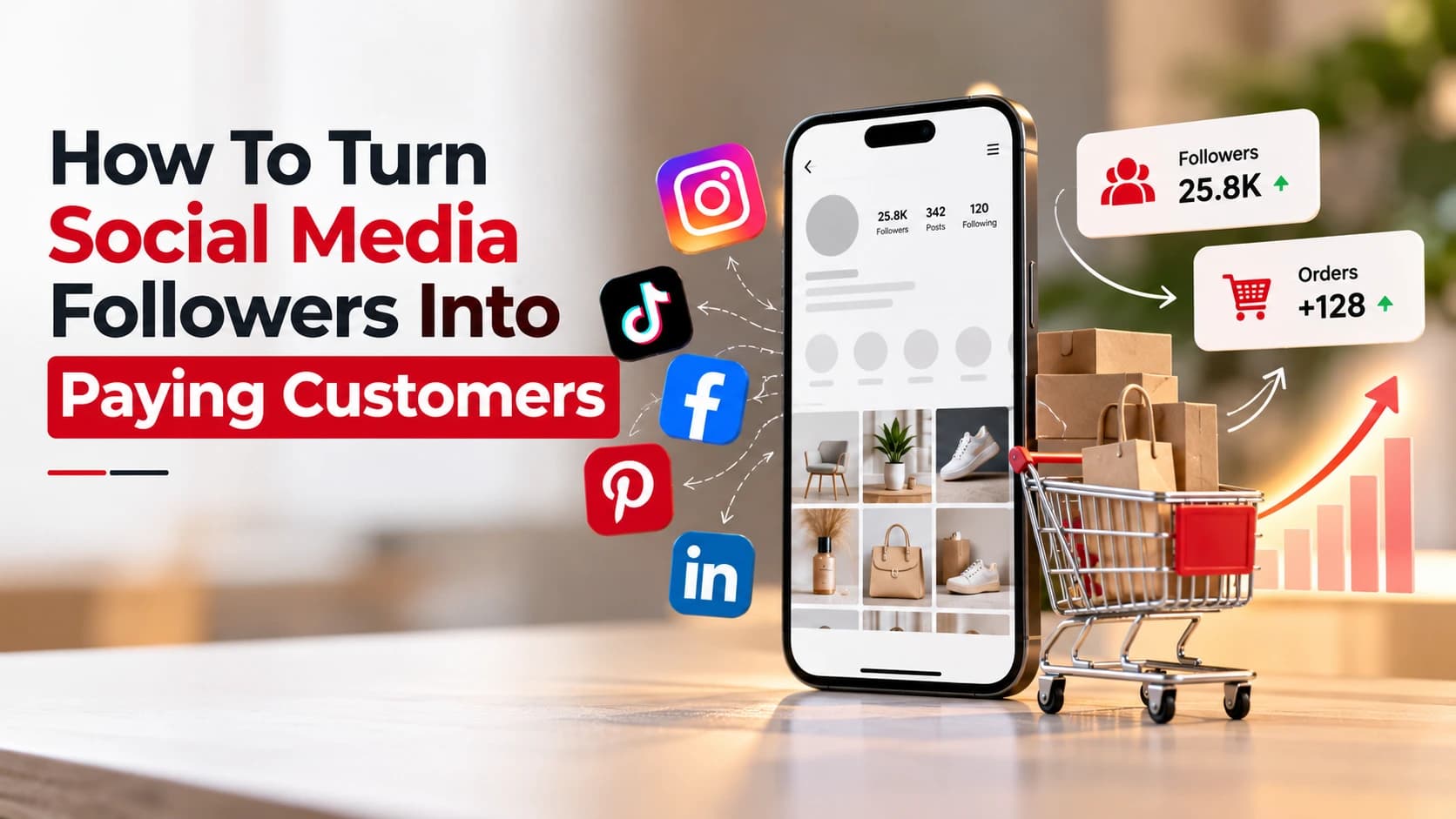
Your Instagram page has thousands of followers. Your reels get views, people like your posts, and sometimes your content even goes viral. But when you check your actual sales or enquiries, the numbers tell a different story.
Sound familiar?
This is a common challenge for businesses investing time and money in social media. They’re building an audience, but that audience isn’t turning into customers.
The problem isn’t always your content or follower count. Often, it’s what happens after someone discovers your business.
Table of Contents
To turn social media followers into paying customers, you need to attract the right audience, build trust, communicate your value, make enquiries easy, and follow up with interested people. Here’s how to create a social media strategy that supports actual business growth.
Why Are Your Social Media Followers Not Buying?
Following a business doesn’t mean someone is ready to purchase.
People follow brands for different reasons. Some enjoy the content, others compare products, and a few may genuinely be considering a purchase.
If your social media strategy focuses only on increasing followers and engagement, you could be missing potential customers.
Common reasons followers don’t convert include:
- Your content gets attention but doesn’t explain what you offer.
- Your profile lacks clear contact or purchasing information.
- Potential customers don’t see enough reviews or proof.
- Your posts don’t guide people towards the next step.
- Enquiries aren’t followed up consistently.
Before spending more on advertising, identify where potential customers are dropping off.
1. Attract Followers Who Are Actually Interested in Your Business
Having 50,000 followers means little if most aren’t interested in buying your products or services.
Instead of targeting everyone, understand your ideal customer.
Think about their location, budget, interests, challenges, and buying behaviour.
For example, a Mumbai-based interior design company doesn’t need followers from every city. It needs homeowners, property investors, and businesses looking for interior design services in its service areas.
Create content that answers their actual questions, such as project costs, timelines, design options, and common mistakes.
A focused social media marketing strategy can help your business attract relevant audiences rather than simply increasing follower numbers.
2. Create Content That Answers Buying Questions
Most businesses publish promotional posts without addressing what customers really want to know.
Instead of repeatedly posting “Buy Now” or “Contact Us,” create content that helps people make decisions.
For example, a skincare business could publish:
- How to choose skincare products for oily skin.
- What to check before purchasing a moisturiser.
- Customer experiences with specific products.
- Product comparisons for different skin concerns.
This type of content answers questions customers may have before purchasing.
According to HubSpot’s 2026 State of Marketing Report, 48.6% of surveyed marketers identified short-form video as the content format delivering their biggest ROI. This supports testing educational Reels and product demonstrations alongside traditional promotional posts.
HubSpot Blog+1
The goal is simple: make your content useful enough that followers consider your business when they’re ready to buy.
3. Turn Your Social Media Profile Into a Conversion Point
Imagine someone watches your Instagram Reel, likes your product, and visits your profile.
What happens next?
If they can’t understand what you sell or how to contact you, you could lose a potential customer.
Your social media profile should clearly communicate three things:
- What your business offers.
- Who your products or services are for.
- How someone can enquire or purchase.
For example, a local furniture business could use this Instagram bio:
“Custom Furniture in Mumbai | Sofas, Beds & Wardrobes | Home Delivery Available | WhatsApp for Pricing & Orders.”
Also ensure your website link, WhatsApp contact, product catalogue, and relevant highlights are easy to access.
Small changes can reduce friction between discovering your business and contacting you.
4. Build Trust Before Asking Followers to Buy
People are often hesitant to purchase from businesses they don’t know.
That’s why trust-building content matters.
Show genuine customer reviews, completed projects, product demonstrations, behind-the-scenes videos, and answers to frequently asked questions.
For example, a web development company can share a website redesign case study explaining the client’s original problem, what was improved, and the outcome.
This gives potential customers something more useful than another promotional graphic.
You can also strengthen your brand’s online presence through consistent digital marketing services that connect your social media activity with your website and other customer touchpoints.
Avoid exaggerated testimonials or unsupported performance claims. Real examples help customers make more confident decisions.
5. Use a Social Media Sales Funnel
Not every follower is ready to buy immediately. A social media sales funnel helps guide people from discovering your business to making a purchase.
STAGE 1
Awareness
Reels, educational posts, useful tips
STAGE 2
Consideration
Reviews, comparisons, case studies
STAGE 3
Conversion
WhatsApp enquiry, consultation, purchase
STAGE 4
Retention
Customer support, repeat purchases, referrals
For example, a fitness coach might attract followers through workout Reels, build trust with client progress stories, offer a free consultation, and convert interested people into paid coaching clients.
Each stage should have a clear next step.
6. Make It Easy for Followers to Contact You
Sometimes customers are interested, but the enquiry process is unnecessarily complicated.
Don’t make people search for your phone number or navigate multiple pages to ask a simple question.
Use clear calls to action such as:
- “WhatsApp us to check availability.”
- “Send us a DM for pricing.”
- “Book a free consultation.”
- “View our collection through the link in bio.”
For service businesses, a short enquiry form can help capture customer requirements.
For product-based businesses, clear pricing, delivery information, and checkout options can make purchasing easier.
Choose a CTA based on what customers need at that stage, rather than using the same message everywhere.
7. Follow Up With Interested Followers
Someone who asks for pricing may not purchase immediately.
They might be comparing alternatives, discussing their budget, or waiting for the right time.
A helpful follow-up can answer unresolved questions and bring them closer to a decision.
For example:
“Hi! Just checking whether you had any questions about the package we discussed. Happy to help with pricing or details.”
Keep follow-ups relevant and respectful. Avoid repeatedly messaging people who haven’t agreed to further communication.
For businesses receiving frequent enquiries, a simple CRM or lead-tracking sheet can help ensure interested customers aren’t forgotten.
8. Use Retargeting Ads to Reach Interested Audiences
Not every follower will see your organic posts, and not every interested visitor will convert immediately.
Retargeting through Meta Ads can help you reconnect with eligible audiences who previously interacted with your business.
Depending on your available data and advertising setup, you can build audiences based on Instagram engagement, website visits, or other permitted interactions.
For example, an online clothing brand could show product-focused advertisements to people who visited its website but didn’t complete a purchase.
However, retargeting works best when your product offer, landing page, and checkout experience are already clear.
9. Measure Sales, Not Just Likes and Followers
Follower growth is useful, but it shouldn’t be your only measure of success.
Track metrics that connect social media activity with business outcomes.
| Metric | What it tells you |
| Profile visits | Interest in your business |
| Website clicks | Traffic from social media |
| Qualified enquiries | Potential sales opportunities |
| Lead conversion rate | How many leads become customers |
| Customer acquisition cost | Cost of acquiring a customer |
| Revenue | Sales generated or influenced |
For example, if you receive 100 qualified enquiries and 12 become customers, your lead-to-customer conversion rate is 12%.
Use UTM links, CRM records, and customer feedback to understand which campaigns contribute to conversions.
How Sagar Tech Can Help Convert Social Media Engagement Into Leads
If your social media pages receive engagement but generate few enquiries, the next step isn’t necessarily posting more content.
You need to understand whether the problem lies in audience targeting, content, customer trust, enquiry handling, or your conversion process.
At Sagar Tech, we help businesses connect social media marketing with lead generation through content planning, campaign management, audience targeting, and performance analysis.
Want to turn your social media presence into more business enquiries? Contact Sagar Tech to discuss your marketing goals.