
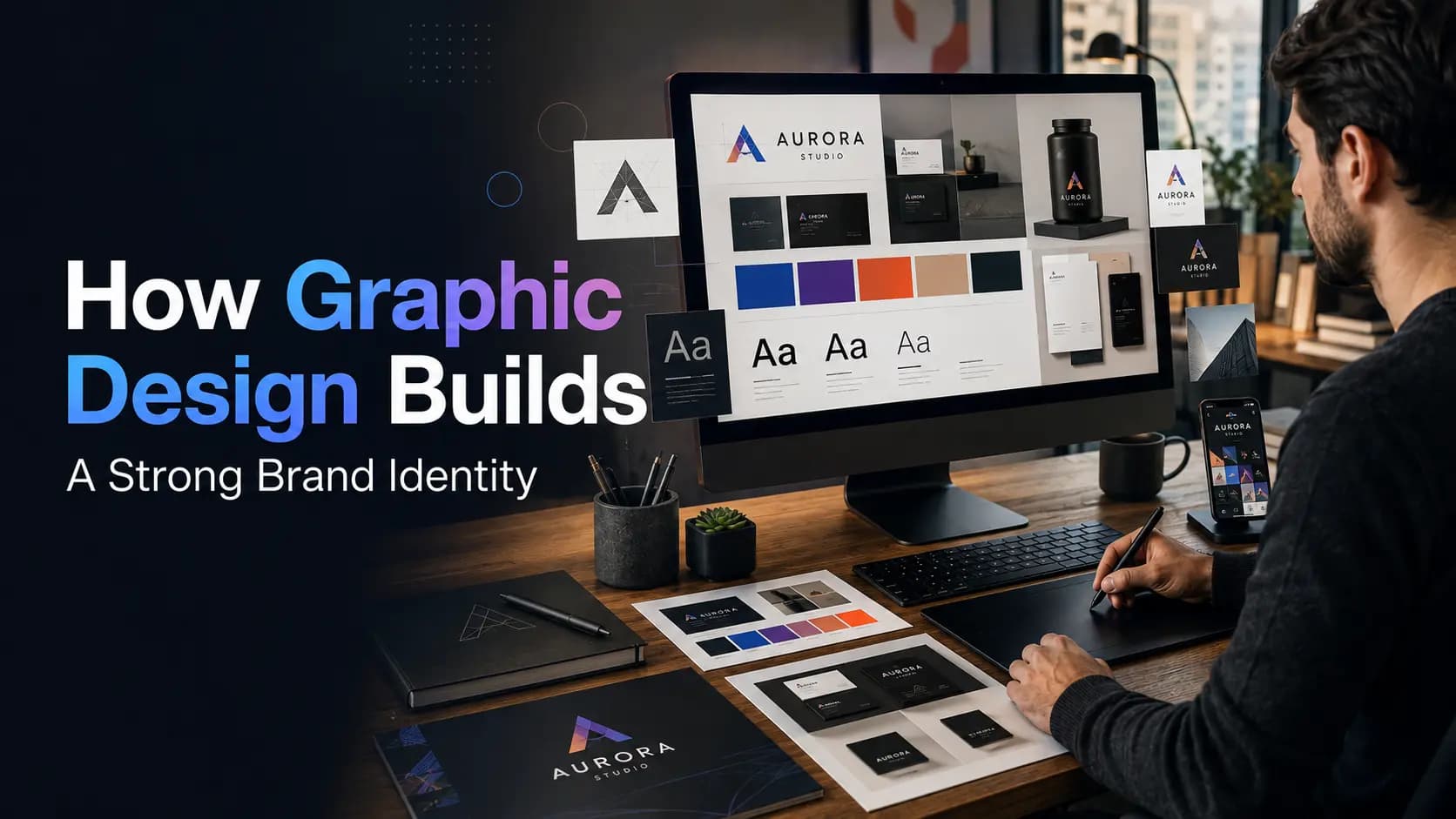
For a business owner, graphic design is not limited to creating an attractive logo or social media post. It shapes how customers see your business, how quickly they recognise it, and whether they feel confident enough to buy from you.
A strong brand identity uses consistent colours, typography, imagery, layouts, and messaging across every customer touchpoint. When these elements work together, your business looks professional, becomes easier to remember, and stands apart from competitors.
Table of Contents
What Is Brand Identity in Graphic Design?
Brand identity is the complete visual representation of your business. It communicates who you are, what you offer, and how you want customers to perceive you.
It generally includes your:
- Logo and its variations
- Primary and secondary colours
- Brand fonts and typography
- Photography and illustration style
- Icons and graphic elements
- Website and social media layouts
- Packaging and printed materials
Your logo is only one part of this system. A strong brand identity ensures that your website, Instagram posts, advertisements, brochures, product packaging, and business cards all look like they belong to the same company.
Why Does a Strong Brand Identity Matter for Your Business?
Customers compare several businesses before making a decision. If your branding looks unclear, outdated, or inconsistent, they may question the quality of your products or services, even when your actual offering is good.
Professional graphic design helps remove that uncertainty.
It Helps Customers Recognise Your Business
People may not remember every advertisement they see, but they can remember familiar colours, logos, shapes, and design styles.
For example, Coca-Cola is recognised through its red colour and script logo, while Apple is known for clean layouts, simple typography, and product-focused visuals. These companies do not redesign their identity for every campaign. They use the same visual language repeatedly until it becomes familiar.
Small and growing businesses can follow the same principle. Consistency makes your marketing easier to recognise on social media, search results, marketplaces, email campaigns, and offline materials.
It Builds Customer Trust
Your business may be reliable, experienced, and customer-focused, but your design must communicate those qualities clearly.
A website with mismatched colours, low-quality images, or difficult-to-read text can make visitors hesitate. Consistent and professional visuals show that your business pays attention to details.
Trust also affects purchasing decisions. According to Salsify’s 2026 consumer research, 68% of shoppers said they would pay more for products from brands they trust.
It Differentiates You From Competitors
Many businesses offer similar products or services. Graphic design gives customers a visual reason to notice and remember yours.
This does not mean using more colours or making every design louder. Your brand should communicate a clear personality based on your target audience. A legal consultancy may need a structured and dependable look, while a children’s clothing brand may benefit from a cheerful and playful identity.
The goal is to look relevant to your customers without appearing like a copy of your competitors.
How Graphic Design Can Support Sales and Conversions
Good design guides customers towards a decision. It organises information, highlights important benefits, and makes the next step easy to understand.
On a service website, this may mean using a clear headline, readable service sections, client proof, and a visible enquiry button. On an ecommerce website, it may include consistent product images, easy-to-read prices, benefit-focused graphics, and a prominent “Buy Now” button.
Design cannot fix an unclear offer or poor service. However, it can present a good offer in a way that customers understand and trust.
Brand consistency can also support business growth. A survey of more than 400 organisations found that respondents associated consistent brand presentation with a potential 10% to 20% increase in growth.
A Practical Brand Identity Framework for Business Owners
Before investing in a new logo or marketing designs, use this five-step framework:
- Define your business: Write down your purpose, values, key services, target audience, and main competitive difference.
- Understand your customers: Identify what they expect, which problems they want solved, and what makes them trust a business.
- Create your visual system: Select suitable colours, fonts, logo formats, image styles, icons, and layouts.
- Prepare brand guidelines: Record how each design element should be used across digital and printed materials.
- Apply and review: Use the identity consistently, then track engagement, enquiries, conversions, and customer feedback.
This process helps you avoid making design decisions based only on personal taste.
Common Graphic Design Mistakes Business Owners Should Avoid
Changing colours frequently, using too many fonts, stretching the logo, copying a competitor’s style, and creating unrelated designs for each platform can weaken your identity.
Another common mistake is focusing only on appearance. Your designs should also be readable, mobile-friendly, accessible, and connected to a clear business goal.
Conclusion
Graphic design builds a strong brand identity by making your business recognisable, trustworthy, and consistent. It helps customers understand what you offer and gives them more confidence when choosing between you and a competitor.
If your website, social media, advertisements, and printed materials currently look disconnected, a structured brand identity can bring them together. Working with professional graphic designers can help you create a clear visual system that supports customer recognition, stronger marketing, and long-term business growth.